
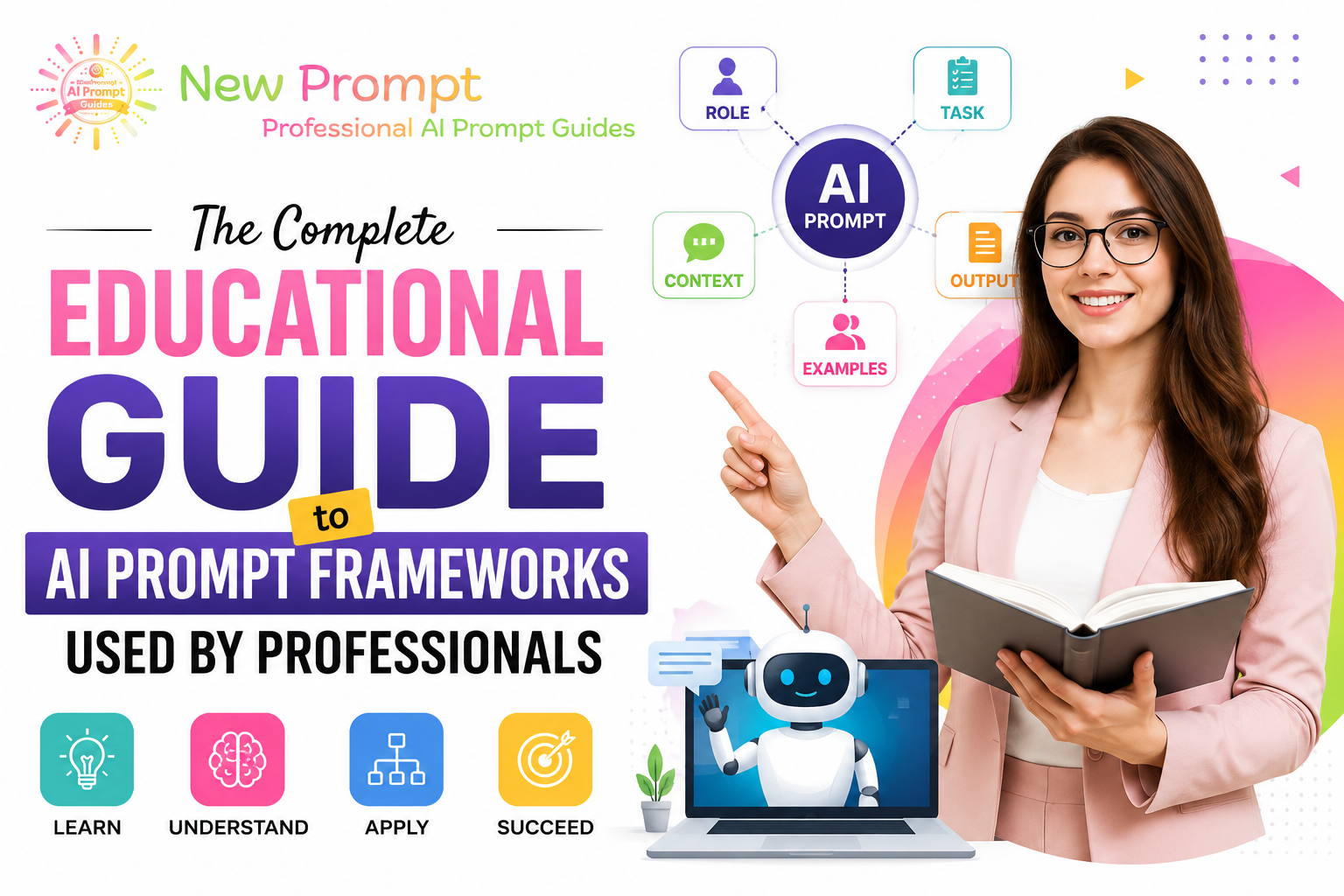
Professional prompt engineers rely on structured frameworks to create consistent, high-quality AI outputs. This complete educational guide explores the most effective prompt frameworks used by experts across industries.
Why Use Prompt Frameworks?
Frameworks provide reliable structure, reduce cognitive load, ensure completeness, and improve consistency across different tasks and AI models.
Major Professional Prompt Frameworks
1. COSTAR Framework
Context – Background information
Objective – Clear goal
Style – Tone and approach
Task – Specific request
Audience – Target reader
Response Format – Desired output structure
2. RISE Framework
Role – Assign expertise and perspective
Instruction – Main task or objective
Specifications – Format, length, constraints
Examples – Few-shot examples when appropriate
3. Chain of Thought (CoT) Framework
Guide the AI through explicit step-by-step reasoning before reaching conclusions. Particularly effective for analytical and problem-solving tasks.
4. Task Decomposition Framework
Break complex projects into smaller, sequential prompts. Each step builds upon the previous output.
Practical Application Examples
COSTAR Framework in Action
“Context: I am launching a new sustainable fashion brand.
Objective: Create a social media content strategy.
Style: Professional yet approachable.
Task: Develop a 30-day content calendar.
Audience: Eco-conscious millennials.
Response Format: Structured table with date, post type, caption idea, and call to action.”
Choosing the Right Framework
- Use COSTAR for comprehensive, structured tasks
- Use RISE for role-heavy creative or analytical work
- Use Chain of Thought for reasoning and problem-solving
- Use Task Decomposition for large, multi-step projects
Combining Frameworks for Advanced Results
Professionals often combine multiple frameworks. For example, using RISE for role and instruction, then applying Chain of Thought for complex analysis.
Best Practices for Framework Usage
- Customize frameworks for your specific domain
- Document successful applications
- Test frameworks across different AI models
- Continuously refine and evolve your frameworks
Conclusion
Professional prompt frameworks provide structure and reliability in AI interactions. By mastering the frameworks in this guide and adapting them to your needs, you can achieve consistently excellent results across writing, analysis, creative work, and complex problem-solving tasks.
Start by selecting one framework and applying it to your most common tasks. With practice and refinement, these frameworks will become powerful tools in your AI workflow.
This complete educational guide contains approximately 950 words and explores professional prompt frameworks in depth.