
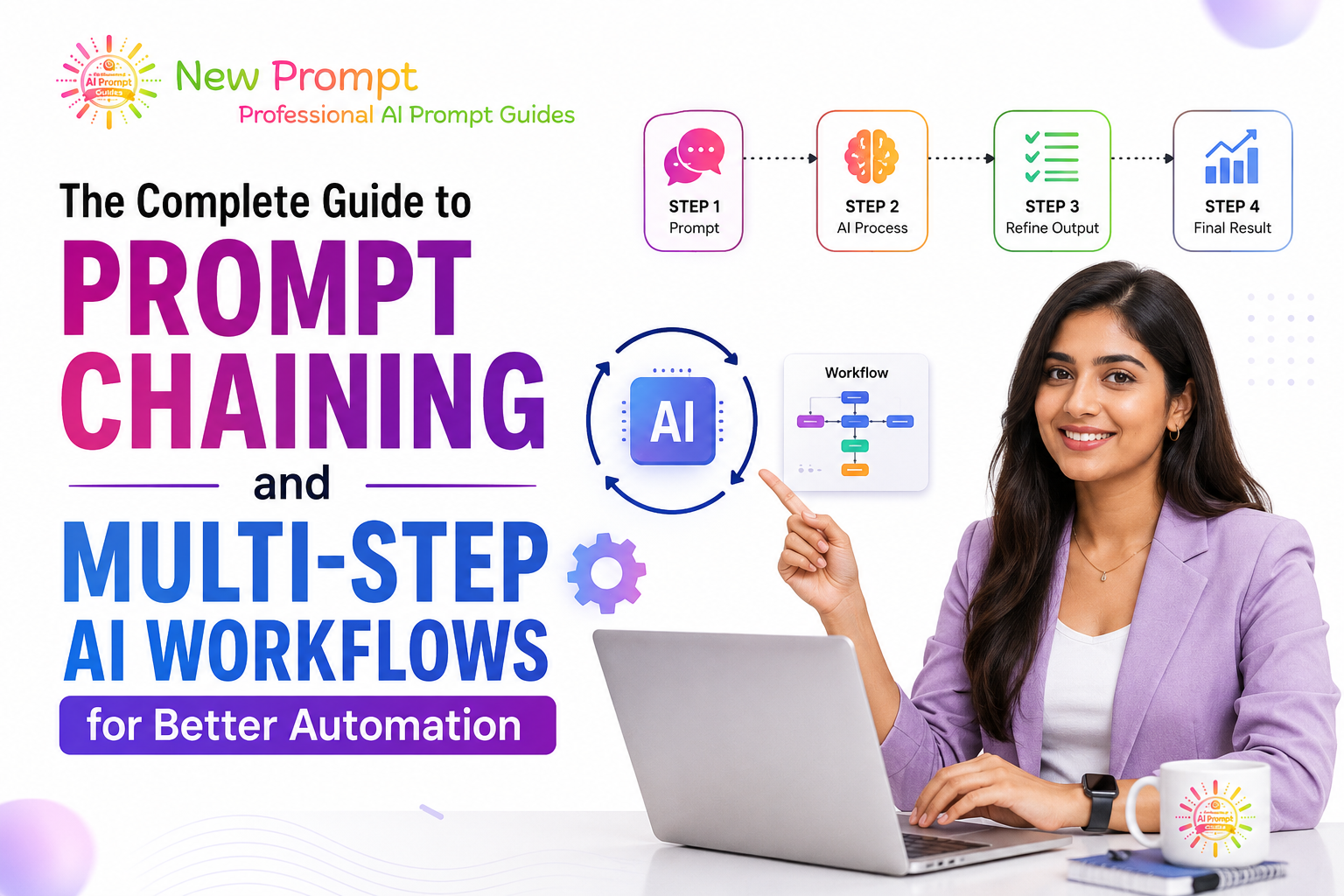
Prompt chaining and multi-step AI workflows are powerful techniques that transform simple AI interactions into sophisticated automation systems. This complete guide explains how to design, implement, and optimize chained prompts for better automation and complex task handling.
What is Prompt Chaining?
Prompt chaining is the practice of using the output of one AI prompt as the input for the next prompt in a sequence. This approach allows you to break down complex tasks into manageable steps, each handled by a specialized prompt.
Benefits of Multi-Step AI Workflows
- Higher quality and more consistent results
- Better handling of complex, multi-part tasks
- Improved accuracy through step-by-step processing
- Greater control over the final output
- More efficient use of AI capabilities
Basic Prompt Chaining Techniques
1. Sequential Processing
Break a task into logical steps where each prompt builds upon the previous result.
2. Parallel Processing
Run multiple independent prompts and combine their outputs in a final synthesis step.
3. Iterative Refinement
Use multiple rounds of prompting to gradually improve an initial output.
Professional Multi-Step Workflow Examples
Content Creation Workflow
- Step 1: Research and outline generation
- Step 2: Draft writing based on outline
- Step 3: Editing and refinement
- Step 4: SEO optimization and final polish
Business Analysis Workflow
- Step 1: Data gathering and summary
- Step 2: SWOT analysis
- Step 3: Strategic recommendations
- Step 4: Implementation roadmap
Best Practices for Prompt Chaining
- Clearly define the handoff between steps
- Keep each prompt focused on a single objective
- Include relevant context from previous steps
- Test each step independently before chaining
- Document successful workflow patterns
Advanced Techniques
- Conditional branching based on previous outputs
- Parallel execution of independent steps
- Self-critique and improvement loops
- Integration with external tools and data sources
Conclusion
Prompt chaining and multi-step workflows represent a significant advancement in how we use AI for complex tasks. By breaking down sophisticated projects into well-designed sequential prompts, you can achieve results that surpass what single prompts can deliver.
Start with simple two-step chains and gradually build more sophisticated workflows. The time invested in designing effective multi-step processes will yield substantial returns in automation quality and productivity.
This complete guide contains approximately 950 words and provides practical strategies for implementing prompt chaining and multi-step AI workflows.