
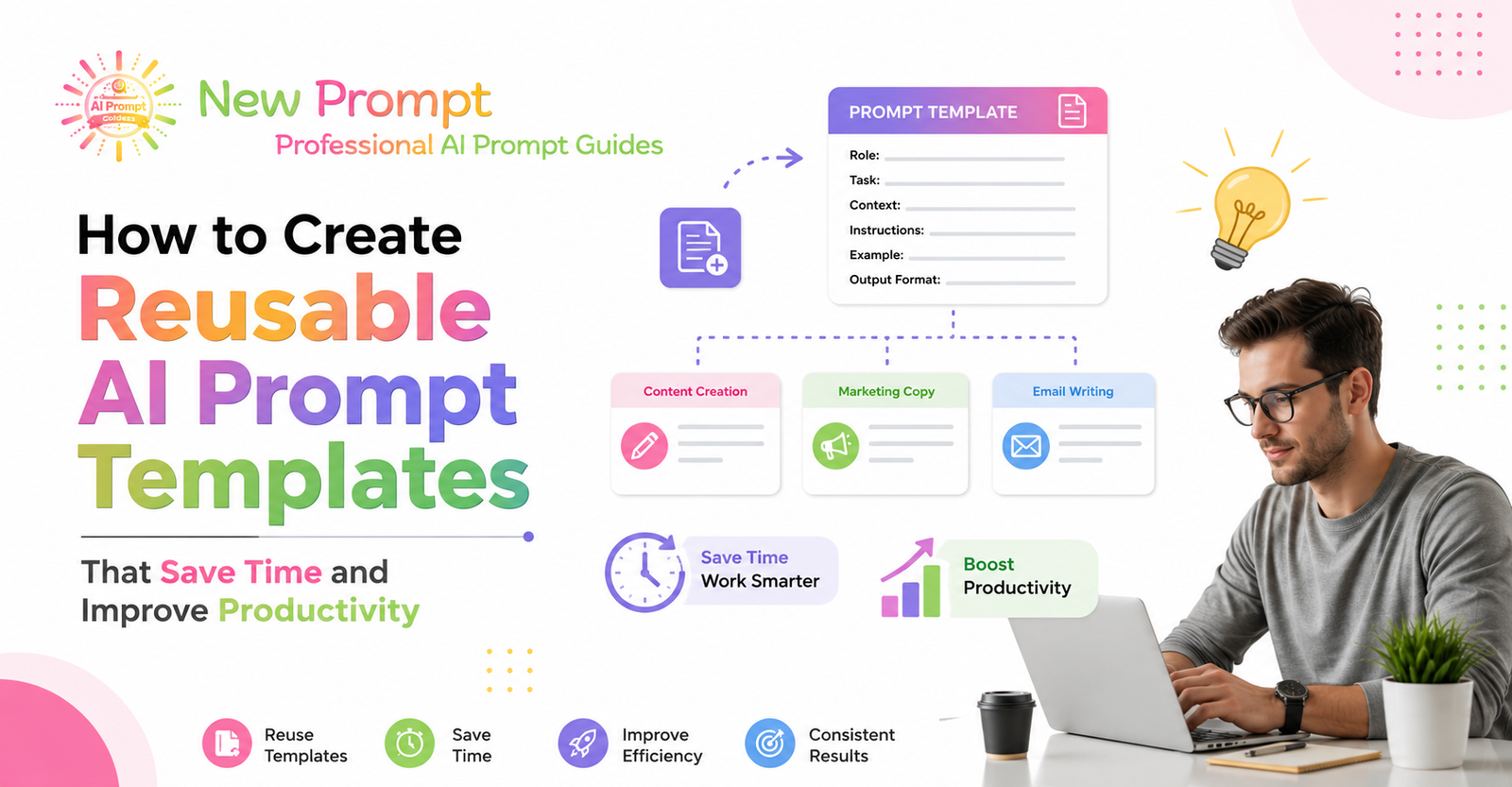
Creating reusable AI prompt templates is one of the smartest ways to save time and achieve consistent, high-quality results. This guide shows you how to design, organize, and effectively use prompt templates for maximum productivity.
Why Reusable Prompt Templates Matter
Well-designed templates eliminate repetitive work, ensure consistency, reduce errors, and allow you to focus on creative and strategic tasks rather than crafting prompts from scratch every time.
Step-by-Step Guide to Creating Effective Templates
Step 1: Identify Recurring Tasks
Start by listing the tasks you perform regularly with AI, such as writing emails, generating reports, brainstorming ideas, or analyzing data.
Step 2: Design Flexible Templates
Create templates with clear placeholders that can be easily customized.
Step 3: Include Essential Components
Every strong template should contain:
- Role assignment
- Context section
- Clear objective
- Output format specifications
- Constraints and guardrails
Proven Template Examples
1. Content Creation Template
“Act as a professional [content type] writer.
Write a [length] [format] about [topic] for [audience].
Tone: [tone].
Include [key elements].
Structure with clear headings and engaging language.”
2. Analysis Template
“Act as an expert [field] analyst.
Analyze [subject] and provide:
1. Key findings
2. Strengths and weaknesses
3. Actionable recommendations
Think step by step and support conclusions with reasoning.”
3. Brainstorming Template
“Act as a creative strategist.
Generate [number] original ideas for [goal].
For each idea, provide a brief description, potential benefits, challenges, and next steps.”
Best Practices for Template Management
- Use a simple, searchable organization system (categories, tags)
- Include notes on when and why each template works well
- Regularly review and update templates
- Test templates across different AI models
- Version control your most important templates
Advanced Template Strategies
- Create meta-templates that help generate other templates
- Build industry or project-specific template collections
- Combine multiple templates for complex workflows
- Include Chain of Thought instructions in core templates
Conclusion
Building a library of reusable AI prompt templates is a high-leverage activity that significantly improves productivity and output quality. The time invested in creating good templates pays for itself many times over through saved effort and better results.
Start by identifying your most frequent AI tasks and creating 3–5 core templates. Refine them over time and gradually expand your library. This systematic approach will transform how efficiently you work with AI tools.
This guide contains approximately 950 words and provides practical strategies for creating reusable AI prompt templates that save time and boost productivity.